
Town Spotlight
Raton, New Mexico: A High-Country Stop with Real Weight
Raton stands at the base of Raton Pass, with the Sangre de Cristo Mountains shaping the wider setting around it. Raton is six miles from the Colorado border on Interstate 25, which makes it an easy town to reach when you are moving north or south through this corner of New Mexico.
Where It Sits
Raton stands at the base of Raton Pass, with the Sangre de Cristo Mountains shaping the wider setting around it. Raton is six miles from the Colorado border on Interstate 25, which makes it an easy town to reach when you are moving north or south through this corner of New Mexico.
The landscape around town gives the place more range than a quick highway glance suggests. Nearby Sugarite Canyon State Park brings in lakes, creeks, forests, and meadows, so Raton sits in a part of northeast New Mexico where road travel and mountain country meet in plain view. Before you decide how long to stay, it helps to picture the town as a base point between the pass, the road, and the open ground beyond town.
What It's Known For
The clearest thread running through Raton is the pass above it. Raton Pass is tied to the Santa Fe Trail, and the National Park Service identifies it as one of the most important segments of the Mountain Branch. That connection gives Raton more historical depth than you might expect from a town you first notice from the interstate.
That older story keeps showing up once you look around. At Sugarite Canyon, the state park preserves the memory of a historic coal camp through an interpretive trail and signs. In town, the Raton Museum keeps artifacts tied to ranching, coal mining, railroads, and pioneer life. Put together, those pieces make Raton feel grounded in movement, work, and the mountain route that helped define this stretch of the region.
What You Can Do Here
Raton works best when you keep the plan simple and let the surrounding landscape and civic stops do the work.
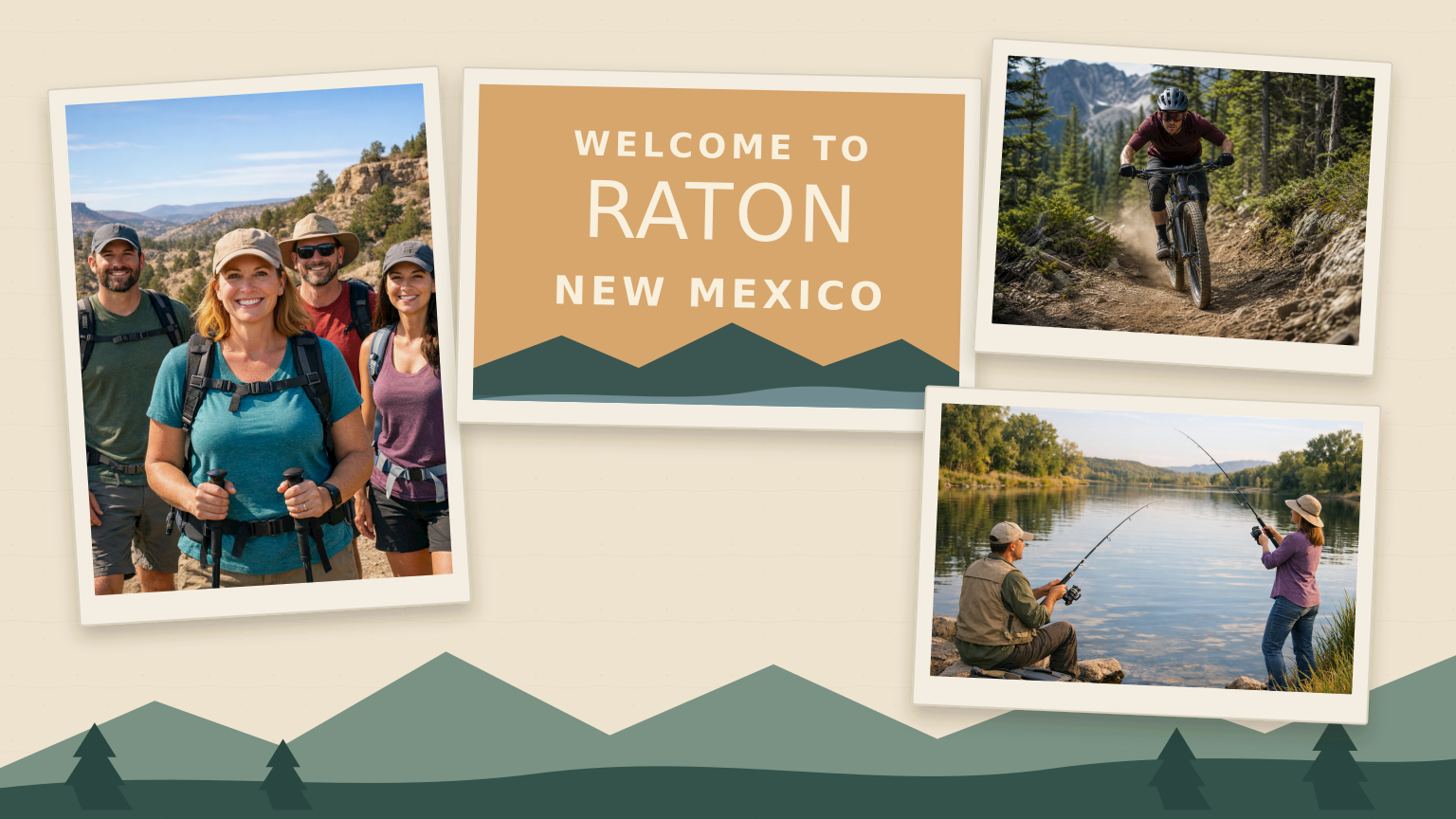
- Hike in Sugarite Canyon State Park if you want the most direct way into the area's mountain scenery.
- Bring a mountain bike if you want to cover more ground on the park's trails.
- Fish in the park if a quieter stretch of the day sounds better.
- Camp at Sugarite if you want to turn a short stop into an overnight.
- You can walk the interpretive trail at the historic coal camp for a closer look at one of the region's older working stories.
- Spend time at the Raton Museum if you want the local history in one place before getting back on the road.
The Rhythm of the Town
Raton does not ask for a complicated plan. A stop here can move from open landscape to quieter in-town places without much effort.
That is part of what makes it appealing on a road trip. You can give the day some air, slow it back down, and leave with a better sense of the place than a gas stop would ever give you.
Local Character
Raton's character comes through most clearly in the places that keep older layers of town life visible. The Raton Museum was created by the Raton Historical Society in 1939, and its collections stay close to ranching, coal mining, railroads, and pioneer life.
The historic district shows another side of town. The Raton Arts & Cultural District points you toward the El Raton Theater, the Shuler Theater, museums, and the Santa Fe Rail Depot. That does not make Raton an arts town from top to bottom, but it does give the center of town a civic mix of performance spaces, museum stops, and railroad history.
A Few Practical Notes
Raton is straightforward to work into a longer drive because it sits right on Interstate 25 and so close to the Colorado line. If you are already heading through northeast New Mexico, it is an easy place to step off the road for a few hours or for the night.
If Sugarite Canyon State Park is part of your plan, check current conditions before you go. The park is under a boil water advisory until further notice, which is worth knowing ahead of a hike, fishing stop, or camping stay.
You can keep the stop simple with a museum visit and time in the historic district, or give the park more room if hiking, fishing, or camping is what brought you here. Either way, Raton makes the most sense when you let the stop match the amount of time you actually have.
Why It Stays With You
Raton leaves an impression because several parts of the region's story stay close together here. Even a short stop can tie together mountain setting, trail history, coal-camp memory, and railroad-era landmarks in a way that feels clear instead of crowded.
Some towns ask you to chase a single big attraction. Raton tends to linger for a different reason. The setting, the route through it, and the older marks of work and travel all sit near the surface, which gives the place a steady kind of presence long after you are back on the highway.