
Town Spotlight
Winter Park, Colorado
Winter Park sits in Grand County on the western slope of the Continental Divide, and that setting tells you the basics right away. This is a mountain town with an alpine backdrop, the kind of place where the landscape is part of the day even when you're not chasing a big outing.
Where It Sits
Winter Park sits in Grand County on the western slope of the Continental Divide, and that setting tells you the basics right away. This is a mountain town with an alpine backdrop, the kind of place where the landscape is part of the day even when you're not chasing a big outing.
One of the easiest ways to picture that setting is Confluence Park. It has a 3/8-mile interpretive loop at the junction of the Vasquez and Fraser Rivers, so you get a simple, grounded look at one corner of town instead of an abstract map view. It is less about making a grand statement and more about understanding the terrain, the water, and the way public space fits into the place.
What It's Known For
Town sources describe Winter Park as a year-round community. That label gives the place a wider shape than a one-season stop. Even if snow is what first puts the name on your radar, the town presents itself as somewhere that expects people to keep using it across the calendar.
The town also says it preserves its heritage, adventurous soul, and alpine environment. That combination lands well here. It suggests a place that wants to stay outdoorsy without flattening itself into a single activity or a single season.
Hideaway Park was established in 1932, and Winter Park was incorporated and renamed in 1978. Those dates help keep the town's civic identity in view. Winter Park feels current in its official form, but it also talks about itself in a way that keeps older roots close.
What You Can Do Here
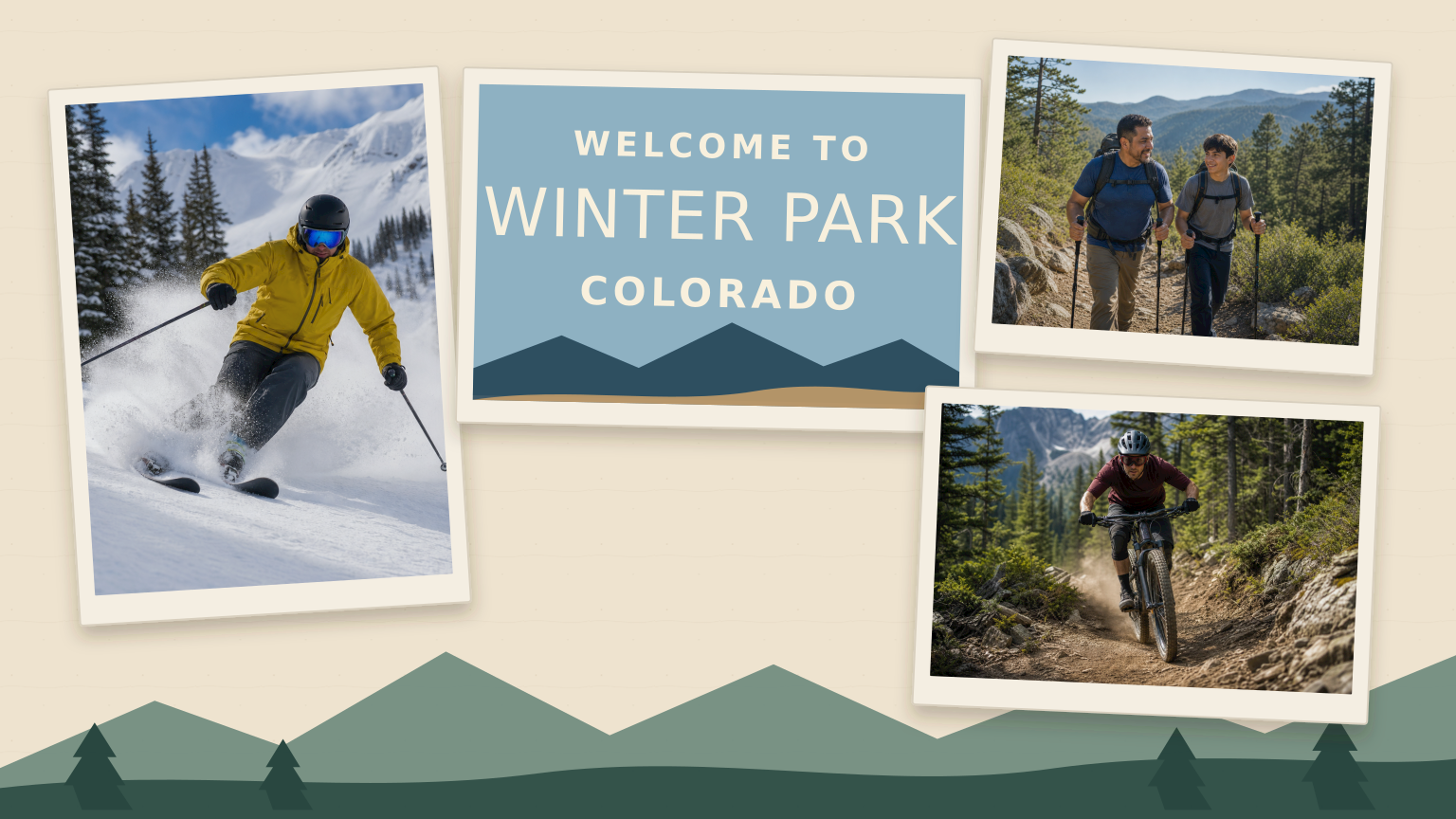
- In snow season, the nearby ski resorts are one of the clearest regional draws. If your trip lines up with winter, that is the most obvious way to spend real time in the area.
- The community trail network supports hiking, which gives you a straightforward way to be outside without overcomplicating the day. It fits whether you want a shorter stretch or a longer outing built around the trails.
- The same trail network also supports mountain biking. If you travel with a bike or like planning around trail use, that adds another solid warm-weather option without changing the feel of the town.
- Confluence Park's 3/8-mile interpretive loop at the junction of the Vasquez and Fraser Rivers gives you an easy place to walk and look around between bigger plans. It works well when you want a quieter pause instead of another full outing.
- Confluence Park also lists fly fishing, so there is a calmer option alongside the bigger mountain pull. It is the kind of stop that can round out a day instead of taking it over.
The Rhythm of the Town
Winter Park makes the most sense when you think about the same outdoor instinct changing shape with the season. In winter, attention naturally shifts toward nearby skiing. When snow isn't the focus, the town's parks stay open year-round and the trail network becomes an obvious way to keep being outside.
That does not make the town feel restless. If anything, it gives Winter Park a steady rhythm. The setting stays the same, but the way people use it can loosen or tighten depending on the weather.
At Wolf Park, pavilion reservations run from May through October. That is a small detail, but it helps sketch a warmer stretch of the year when planned time outside becomes part of the pattern too.
Local Character
Winter Park's character comes through in the way public recreation shows up as part of everyday town life. Hideaway Park dates to 1932, and the town's parks read like places meant to be used, not just admired from the edge.
The town's own language helps here too. When Winter Park talks about heritage, an adventurous soul, and its alpine environment, it does not sound like a place trying to separate civic life from outdoor life. The two sit close together.
The 1978 incorporation and renaming also give the town an interesting frame. Winter Park is not leaning on centuries of municipal history to make its case. Instead, the place comes across as a newer civic identity built in a setting that already had enough pull to shape how people gathered and spent time.
A Few Practical Notes
If you are using town parks, keep the ground rules in mind. Town parks are first-come, first-served, which is useful to know if you are planning a picnic stop, a meet-up, or a short break between other plans.
Confluence Park lists ADA access and an accessible fly fishing deck. That makes it one of the more approachable public options if you want a lower-key stop or need a more accessible setup.
One rule is especially worth remembering: overnight camping is prohibited in town parks. And if Wolf Park is part of your plan, pavilion reservations there run up to four hours from May through October.
Why It Stays With You
Winter Park stays with you for quiet reasons. The mountain setting is obvious, but the stronger impression is how naturally the town keeps outdoor life in view instead of treating it like a special occasion.
On the western slope of the Continental Divide, it leaves the impression of a place that keeps outdoor life close through the year. That kind of memory is not flashy, but it tends to last.