
Town Spotlight
Angel Fire, New Mexico
Angel Fire sits in the Sangre de Cristo Mountains, the southernmost subrange of the Rockies. That mountain setting is the first useful thing to know, because it frames the town before you sort out any plans. The village is also described as high-altitude, so the landscape reads like the starting point rather than a backdrop added later.
Where It Sits
Angel Fire sits in the Sangre de Cristo Mountains, the southernmost subrange of the Rockies. That mountain setting is the first useful thing to know, because it frames the town before you sort out any plans. The village is also described as high-altitude, so the landscape reads like the starting point rather than a backdrop added later.
It also sits on the Enchanted Circle Scenic Byway, which helps place it on a named northern New Mexico route. If you're tracing towns by the road as much as by a map, that gives Angel Fire a clear sense of where it belongs.
The broader trail map adds another layer. The South Boundary National Recreation Trail runs from Taos to Angel Fire, so the town connects, at least on the regional map, to a longer mountain line than what you see from a turnout or a main road.
What It's Known For
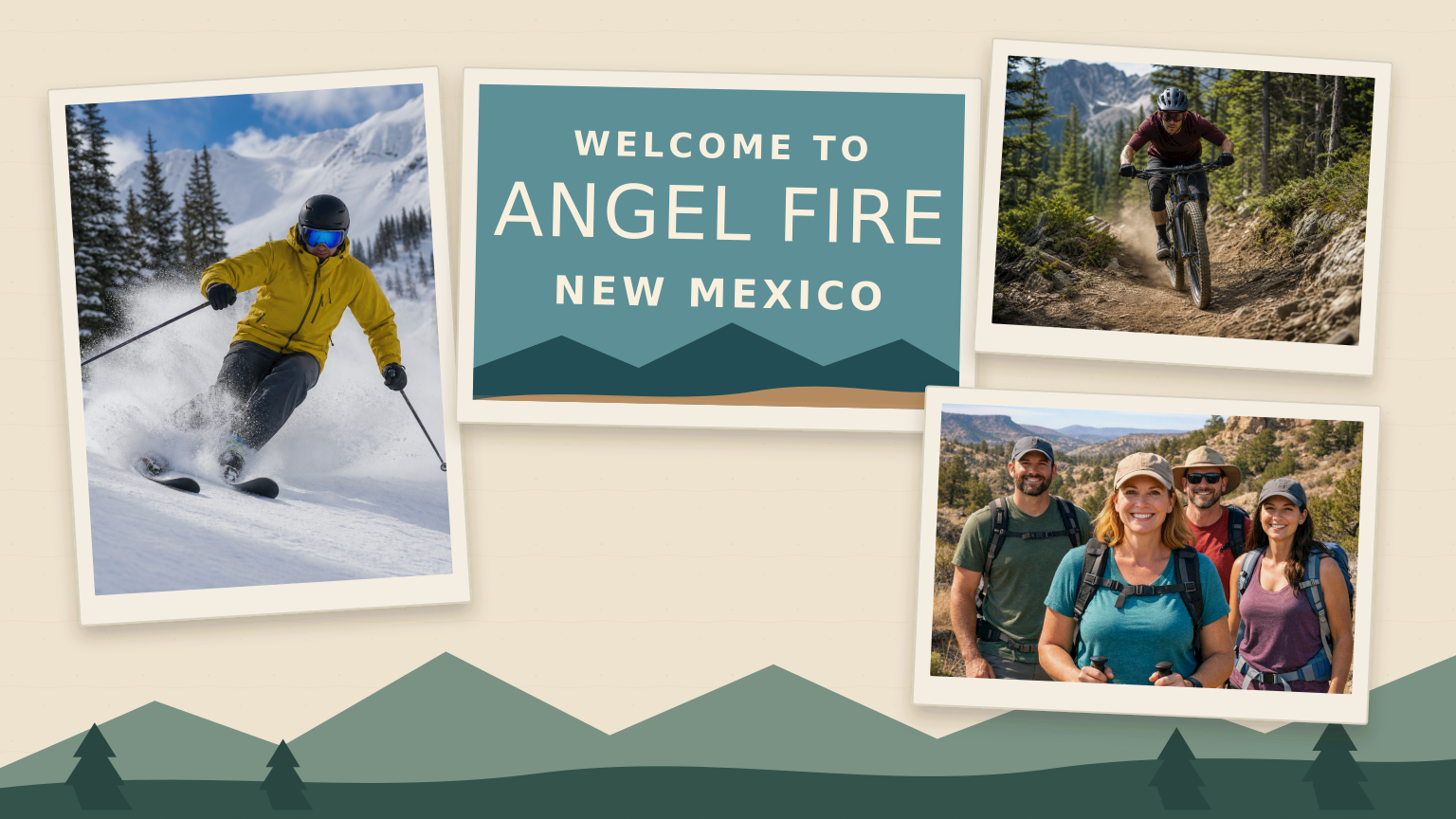
If you want the quickest read on Angel Fire, start with the two activities the village makes easiest to see: skiing in winter and mountain biking in summer.
Skiing is the clearest winter marker. It is the activity most directly tied to the town's cold-weather identity, so you do not have to guess what season carries the strongest established pull.
Mountain biking gives the warmer months their own identity instead of making summer feel like the off-season. It keeps Angel Fire from reading like a place that only turns on when snow arrives.
Taken together, those two activities make Angel Fire read as a mountain place with a strong cold-weather season and an equally clear summer lane.
What You Can Do Here
- Ski if you're here in winter. That's the most clearly defined way to plug into Angel Fire's setting and the activity most directly linked to its name.
- Ride mountain bikes in and around town in summer. The village treats it as a major warm-weather activity, so it is not just an extra add-on once the snow is gone.
- Hike the greenbelt trails when you want something simpler and more open-ended than a full bike day. They give you a way to spend time outside without committing to a bigger push.
- Look at the South Boundary National Recreation Trail if backpacking or a longer day trip is more your speed. It widens the picture from short local outings to a regional route with more range.
- Play golf if you want another outdoor option that is not built around trail mileage. It belongs to Angel Fire's recreation mix without taking over the town's identity.
- Consider horseback riding in the Moreno Valley and Carson National Forest around Angel Fire. It changes the pace and widens the picture beyond skis, bikes, and hiking.
The Rhythm of the Town
The seasonal shift is one of the plainest things about Angel Fire. The village describes snowy winters and mild summers, and that simple contrast does a lot to shape the feel of a day here.
Winter points attention toward snow. Summer opens more room for hiking, biking, and longer stretches outside. You do not need an event calendar to understand the change. The weather already tells you which version of town you are getting.
Local Character
The village calls Angel Fire a high-altitude mountain village, and that phrase fits the tone of the place. It sounds straightforward. The emphasis stays on elevation and mountain setting, not on dressing the town up as something bigger or busier than that.
There is a certain simplicity in that. The place reads as comfortable being identified by its terrain first, which gives it a grounded feel.
A Few Practical Notes
If you like getting oriented before choosing a direction, keep the Visitor Center in mind. It offers hiking maps, street maps, brochures, and vacation guides, which is useful when you want the basics in hand before deciding how to spend the day.
It can also help with places to explore and current events. In a town where your plans may shift with the season, that kind of guidance is practical. A quick stop there can help you match the day to the right activity instead of guessing from the car.
Why It Stays With You
Angel Fire stays with you because its appeal is easy to read. The mountain setting, the snow season, the summer trail energy, and the plainspoken village identity all point in the same direction.
A town that feels this tied to snow, trails, and open mountain space tends to linger for its clarity more than for any single headline moment.