
Town Spotlight
Granby, Colorado: Between the Rail Line and the Recreation Country
Granby sits between Grand Lake and Winter Park, right in the middle of a stretch of mountain Colorado where a drive can tilt either toward lakes or toward the slope-and-pass side of the county.
Where It Sits
Granby sits between Grand Lake and Winter Park, right in the middle of a stretch of mountain Colorado where a drive can tilt either toward lakes or toward the slope-and-pass side of the county. That location gives it a useful kind of identity. It is not trying to outshine either neighbor. It works more like a steady center point in the route through this part of the high country.
The town is at 7,935 feet, so the elevation is part of the experience even before you settle on what to do. The broader setting matters too. The Arapaho National Recreation Area covers 35,000 acres in the upper reaches of the Colorado River Valley, which helps explain why Granby feels closely tied to open land and outdoor use even when your first stop is in town.
What It's Known For
Granby was founded in 1905, and the town still frames itself through the kinds of work that shaped it early on. Its roots are described as logging and railroad roots, which gives Granby a more practical identity than the polished mountain-town image people sometimes expect.
It has also maintained its ranching heritage, and that adds another layer to the picture. Put those threads together and Granby feels built around movement, land, and utility. It does not read like a place that arrived later just to decorate the view.
That mix is what makes Granby stand apart. Railroad history suggests connection and passage. Logging and ranching point to labor and land. Even in a region known for recreation, Granby's identity still starts with the work that helped place it here.
What You Can Do Here
Granby's best options are easiest to understand when you think beyond a quick stop in town and out toward the public land and water nearby. This is a town where the surrounding landscape does much of the recreational lifting, and the appeal is simple: spend time outside, then use Granby as the place that holds the day together.
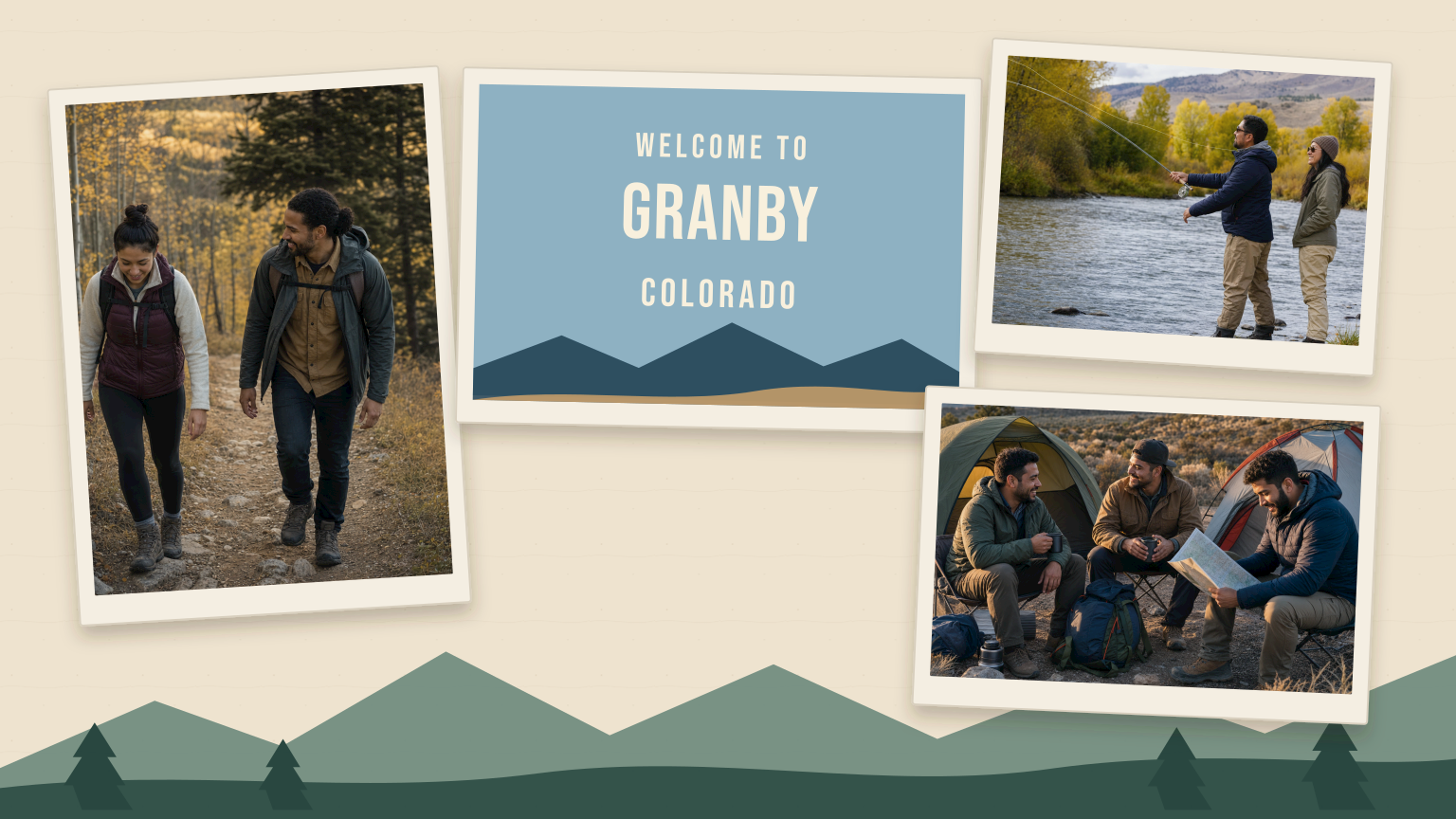
- Hike in the Arapaho National Recreation Area. With so much protected recreation land in the upper Colorado River Valley, walking is one of the clearest ways to get a feel for the country around Granby.
- Keep Lake Granby in mind if fishing is the point of the day. Fishing is one of the reservoir's primary recreation uses, and it gives this part of the area a very direct, no-frills kind of draw.
- Make room for camping if you want more than a quick stop. Camping is also one of Lake Granby's main recreation uses, which suits Granby well if your plans lean toward a longer day outside rather than a fast pass through.
That mix gives Granby a straightforward half-day or full-day logic. You can choose one anchor activity and let the rest of the place stay simple, which often feels like the right way to handle mountain towns that sit close to this much public land.
The Rhythm of the Town
Granby's seasonal change shows up most clearly around Lake Granby. In the warmer part of the year, nearby hiking, fishing, and camping open up the day and make the town feel oriented toward getting outside.
Winter tightens that pattern. Lake Granby facilities close because of ice and snow, so the area asks for a different pace when cold weather takes over.
Local Character
Granby's name comes from attorney Granby Hillyer, which is a good small reminder that western town history can be more matter-of-fact than romantic. The name does not arrive with frontier theatrics attached to it. It just sits there plainly, much like the town's own self-presentation.
That plainness works in Granby's favor. When a place openly holds onto logging and railroad roots while also keeping its ranching heritage in view, it ends up with a steady, work-shaped character. Granby feels less interested in performing a mountain identity than in simply carrying one forward.
It is a useful contrast to some of the more polished stories mountain places can tell about themselves. Granby keeps its footing in ordinary things like work, access, and the landscape around it, and that gives the place a calm kind of confidence.
A Few Practical Notes
Granby's town parks are free and open to public use at any time, which makes casual stops easier than you might expect. There is no reservation system for them, so use is first come, first served. If you like simple public space without much ceremony, that is helpful to know.
The train station is open from 7:00 AM to 7:00 PM, so rail travelers have a clear window to work with. And if Lake Granby is part of the plan, season matters. Facilities there close in winter because of ice and snow, so some of the most obvious outdoor options are better saved for the milder stretch of the year.
Those are small details, but they shape the visit in practical ways. Granby tends to reward flexible plans, a little awareness of season, and a willingness to use the public spaces that are already there.
Why It Stays With You
Granby sticks with you because its pieces fit together quietly. The rail-and-logging story, the ranching thread, the open recreation country nearby, and the town's straightforward public spaces all point in the same direction. In a part of Colorado that can easily slide into spectacle, Granby feels comfortably unvarnished.