
Town Spotlight
Breckenridge, Colorado: A Mining Town with Mountain Edges
Breckenridge sits in the Rocky Mountains, and that mountain setting is the first thing to keep in mind as you roll in.
Where It Sits
Breckenridge sits in the Rocky Mountains, and that mountain setting is the first thing to keep in mind as you roll in. The old Breckenridge district is near the crest of the Continental Divide, so the geography feels close and immediate rather than abstract. That high-country position helps the town read as something shaped by terrain rather than simply placed beside it.
Blue River is part of that same layout. The district is drained by Blue River, which gives the terrain a clear line through all the elevation and old mining ground. Instead of feeling like background scenery, the water reads as one more part of the town’s structure. Picture Breckenridge as a place where historic streets and mountain water share the same frame.
What It's Known For
Breckenridge is known as a mining boom town, and that identity still anchors how people describe it today. Settlement here began in 1859, and that beginning still shapes the town’s identity. The town’s history lands clearly because the mining-era story is not reduced to a plaque or a single landmark.
You can see that most clearly in the Breckenridge Historic District, which includes about 180 structures. That scale matters because it’s not just one preserved corner; it’s a broad historic core with real presence. For a visitor, that means the sense of continuity is spread across the area instead of tucked into one stop.
That continuity helps Breckenridge feel distinct from many other mountain stops. The mountain backdrop is obvious, but the historic form is what gives the town its specific personality.
What You Can Do Here
If you want an active stretch of the day, there are a few straightforward options that connect well to the surrounding landscape.
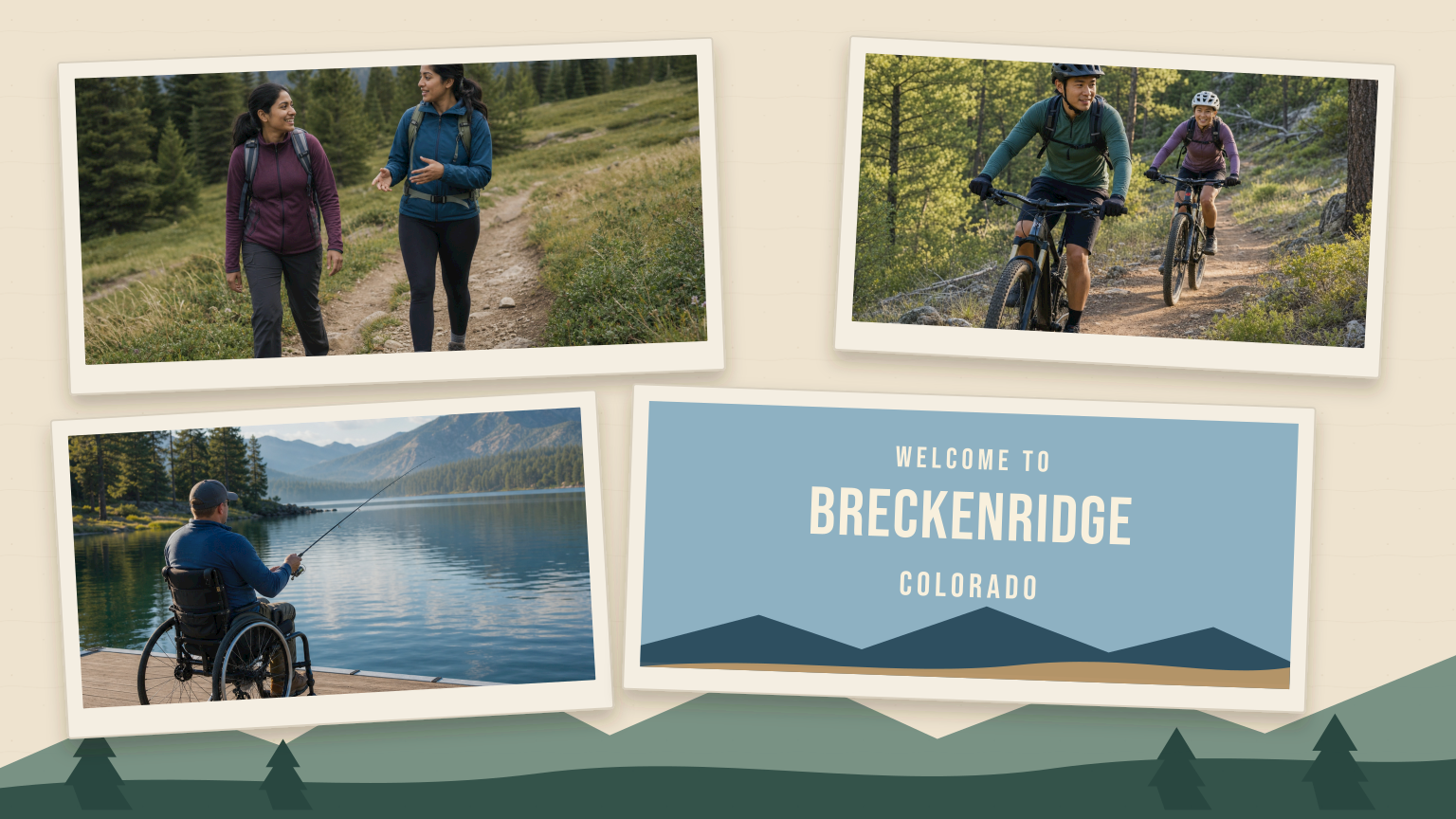
- Bakers Tank Trail is popular with hikers.
- The same trail is also popular with mountain bikers.
- Blue River lists fishing as an activity.
That mix gives you a useful range without overcomplicating your plans. You can pick trail time, river time, or both, depending on how much energy you have and how long you’re staying. It also helps that the options point in different directions: one toward trail movement and one toward the river.
The Rhythm of the Town
Breckenridge has a warm-season rhythm that’s easiest to notice by watching how people move through the area. The Summit County Recreational Pathway records over 200,000 trips each year between May and October, so that part of the regional corridor clearly gets heavy use when snow-free months open up. That gives warm-weather activity a visible pattern instead of leaving it as a vague impression.
In the fall, kokanee salmon migrate upstream from Green Mountain Reservoir, which shifts attention back to the river. That seasonal change gives the area a different feel than late spring and summer. The result is not a new identity so much as a change in emphasis.
So the pace changes with the season. Warmer months lean into pathway movement, while fall adds a quieter river-centered pattern.
Local Character
Local character here comes from what was kept, not from one polished historic block. The historic district includes late-19th- and early-20th-century commercial, residential, and religious architecture, so different parts of earlier daily life still show up block to block. Because those building types sit together in one district, the preserved story feels wider than a single-use streetscape.
That variety gives Breckenridge texture. You can read business life, home life, and community life in the same historic area, which makes the town feel layered instead of one-note. It is that mix, more than any one façade, that gives the place staying power.
A Few Practical Notes
If you’re planning to combine transit and riding, Summit Stage buses carry bike racks from May 1 to Oct. 31 between sunrise and sunset. That window can make your route planning a lot easier in warmer months. It is a practical detail, but a useful one if bikes are part of how you want to move around the broader area.
Parking takes a little extra planning. Overnight parking is prohibited on all town streets year-round, so it helps to choose a parking plan before you settle in. That way, the logistics are handled before the evening rather than becoming a last-minute problem.
Used together, those two details are simple but helpful: seasonal bike-and-bus support is available, and street parking overnight is not. If you’re driving, handle parking on purpose.
Why It Stays With You
Breckenridge sticks with people because several strong elements are always in view at once: mountain geography, water movement, and a historic core that still has real scale. Near the Continental Divide, with Blue River draining the district and about 180 structures still standing in the historic district, Breckenridge feels grounded from more than one direction at once. The impression is steady because none of those elements feels incidental.
That mix gives the town a steady presence. Even after you leave, it’s easy to remember the way landscape and history stay tied together in the same small frame.